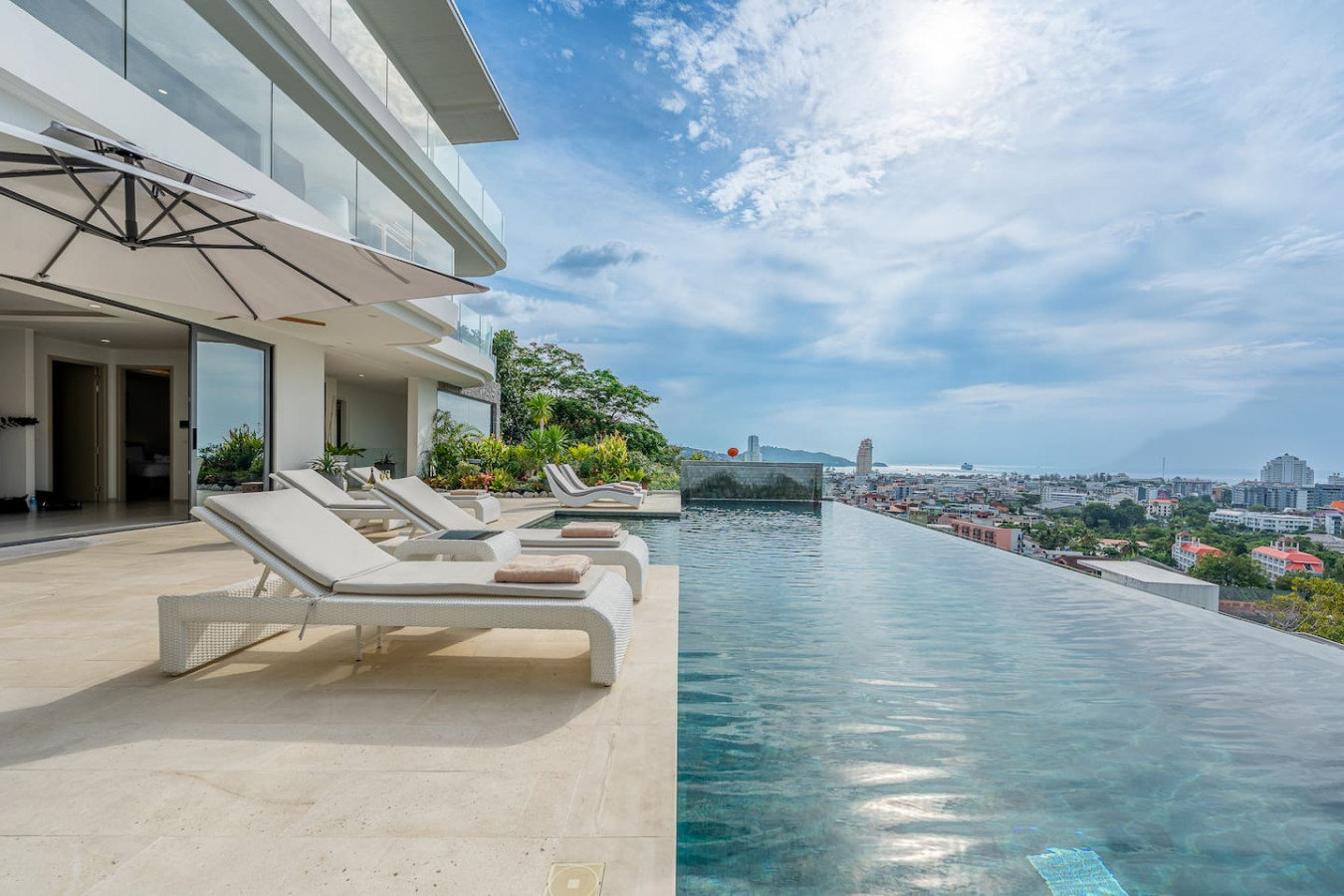
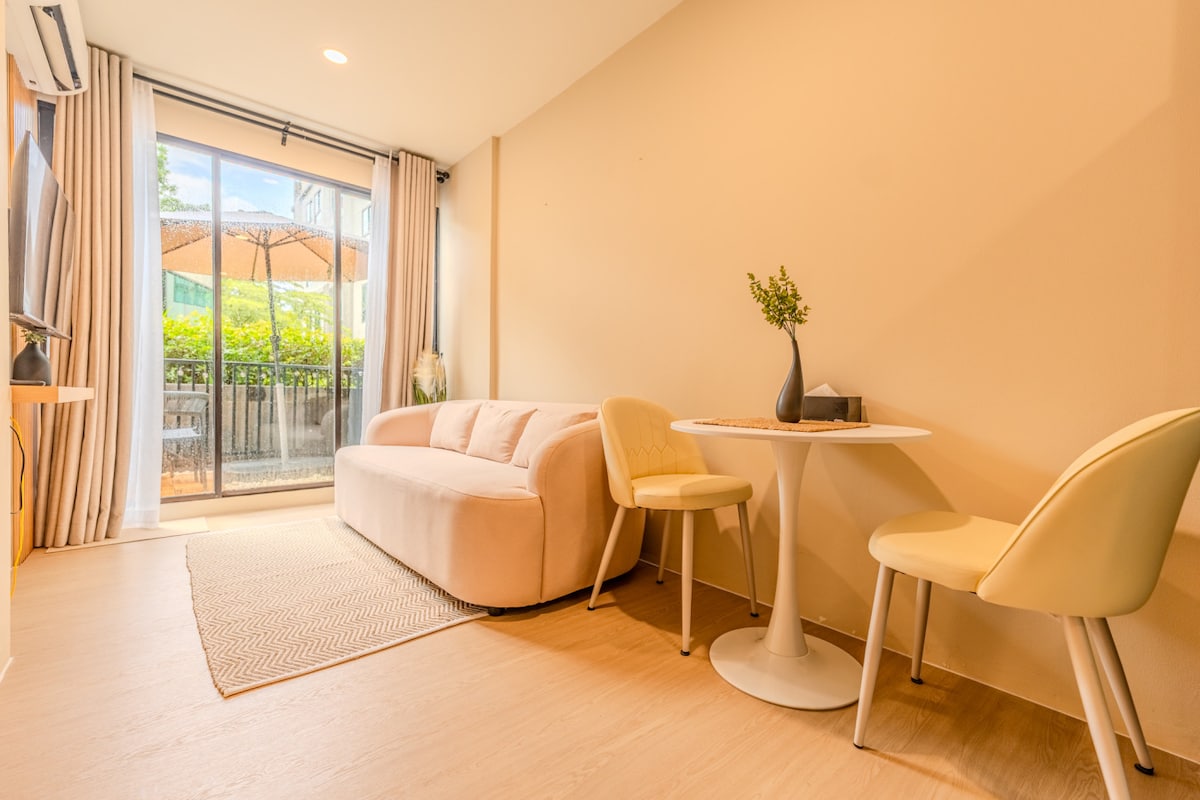
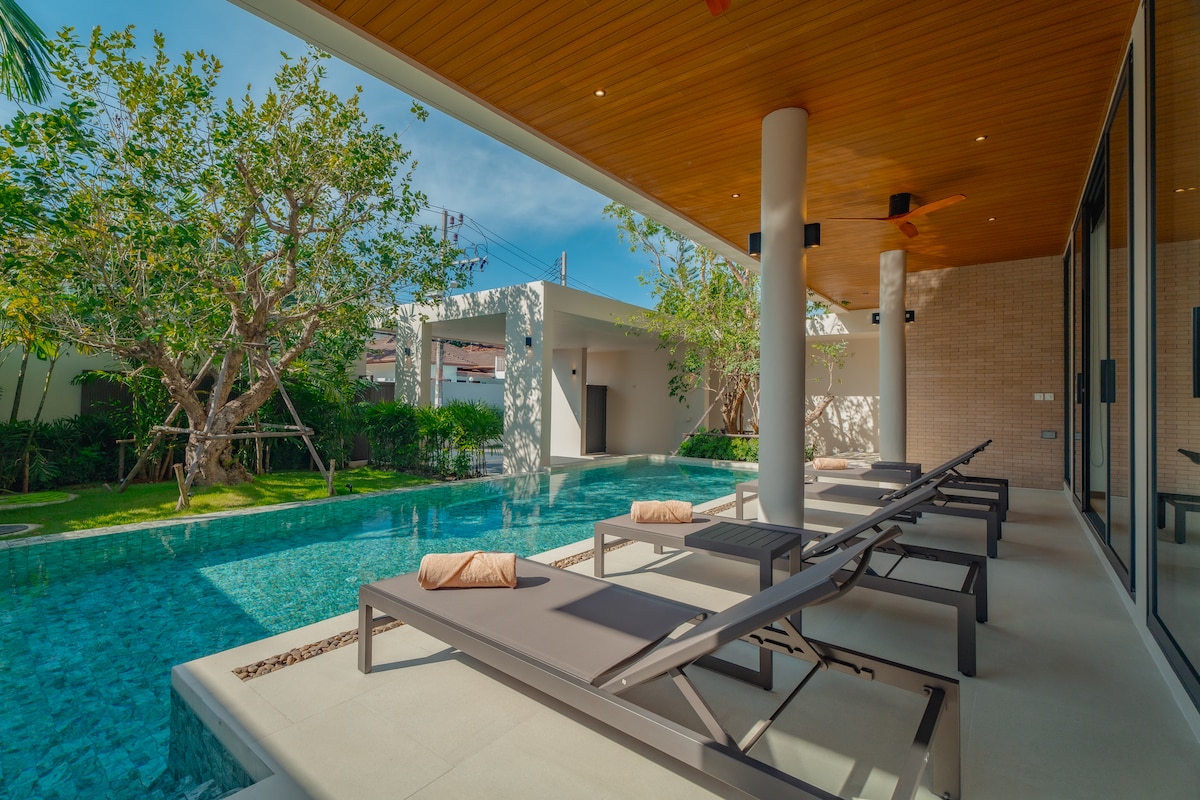
Every foreign owner of a Phuket condo or villa reaches the same fork: holiday guests by the night, or one tenant for a year. Phuket property management looks very different down each road, because Thai law treats them differently. Lets of under a month count as a hotel business under the Hotel Act unless the home qualifies for an exemption, while lets of a month or longer follow the lease rules of the Civil and Commercial Code and, for landlords with three or more units, a consumer-protection notification on residential leases.
This guide sets out what a foreign owner can own, the rules for short and long lets as they stand in November 2026, deposits, reporting tenants to immigration and tax. Each rule links to the official text, the Revenue Department or a named Thai law firm. It is not legal advice; a Thai lawyer or accountant can confirm how the rules apply to you.
At a Glance
- Short lets: under a month counts as a hotel business; a licence is needed unless the home has up to 8 rooms and 30 guests and is notified to the registrar
- Long lets: a lease of more than 3 years must be in writing and registered, or it binds for 3 years only
- Deposits: deposit plus advance rent capped at 3 months’ rent for landlords with 3 or more units (since September 2025)
- Owning: foreigners can own a condo unit within a 49% building quota, but not land; a lease runs for 30 years at most
- Tenants from abroad: report them to immigration within 24 hours on the TM30 form
- Tax: rent is taxable income with a flat 30% expense deduction (as of November 2026)
In This Guide
- What Phuket Property Management Covers
- What a Foreign Owner Can Own
- Short-Term Lets: Hotel Rules
- Long-Term Lets: Lease Rules
- Short or Long: How They Compare
- Reporting Guests and Tenants (TM30)
- Tax on Rental Income
- How Silqhaus Manages Homes
- Frequently Asked Questions
- Sources
What Phuket Property Management Covers
A property manager runs a home you can’t look after yourself: finding guests or a tenant, pricing, check-ins, cleaning, repairs, paperwork and reporting back to you. How much of that is needed depends on the letting model. A year-long tenant means one contract and occasional repairs; holiday guests mean a new arrival every few days, each one cleaned for, greeted and reported to immigration.
Demand for holiday lets follows the seasons; our guide to the best time to visit Phuket has the month-by-month weather behind them, and our guide to Phuket holiday villas covers what guests look for.
What a Foreign Owner Can Own
Foreigners can own a condominium unit outright, but not land. Thai law doesn’t prevent foreigners from holding freehold condo units (Siam Legal); in each condominium, foreign ownership may not exceed 49% of the total floor area of all units, and the usual way to qualify is to bring the purchase money in from abroad in foreign currency (Tilleke & Gibbins).
Land is different: foreign nationals are generally prohibited from owning it, and since August 2026 an Interior Ministry circular has Land Offices screening companies that may hold land for foreigners as nominees (Tilleke & Gibbins, August 2026). A villa is therefore often held on a lease, which can’t run longer than 30 years (Civil and Commercial Code section 540, Siam Legal library). According to AustCham Thailand, the Supreme Court held in case 4655/2566 that clauses promising automatic further 30-year renewals can’t be enforced (AustCham Thailand).
Short-Term Lets: Hotel Rules
Letting by the night or the week is a hotel business in Thai law. The Hotel Act defines a hotel as a place giving travellers or anyone else temporary accommodation for payment, and leaves out places let only by the month or longer (Hotel Act, English translation). Running a hotel without a licence can mean up to a year in prison (section 59).
Small homes have a way in: since 29 October 2023, places with up to 8 rooms and up to 30 guests are not regarded as hotels once notified to the registrar; the limit used to be 4 rooms and 20 guests (Tilleke & Gibbins, October 2023). Condo units are the exception: a November 2023 Department of Lands circular says units in condominium buildings can’t be used for a hotel business (Tilleke & Gibbins, November 2023). A proposed Accommodation Establishments Act would replace the Hotel Act, but the current Act applies until a new law is published (Tilleke & Gibbins, October 2026).

Long-Term Lets: Lease Rules
A lease of a month or more is outside the Hotel Act and follows the Civil and Commercial Code. Under section 538, a lease of land or buildings for more than 3 years must be made in writing and registered with the competent official, in practice the Land Office, or it can only be enforced for 3 years (Siam Legal library).
Landlords with at least 3 residential units also fall under a Contract Committee notification on residential leases, in force since September 2025 (Tilleke & Gibbins, August 2025). For them:
- Deposit and advance rent: together no more than 3 months’ rent on a short lease (up to 3 years) or a longer lease paid monthly.
- Getting the deposit back: within 7 days if nothing is damaged, or 14 days after deducting real damage.
- Electricity and water: no more than the official tariffs.
- Bills and fees: written invoices at least 3 days before payment is due, and no renewal fee for extending the contract.
- Penalty: up to 1 year in prison, a fine of up to 200,000 THB, or both (as of November 2026).
An owner with one or two homes is outside the notification, but its terms make a sensible standard for any lease. Our guide to the Destination Thailand Visa covers one route for foreigners who want to stay in Thailand for longer.
Short or Long: How They Compare
The choice usually comes down to the building and how hands-on you want to be. A condo unit is realistically a long-let home; a house or villa within the 8-room limit can do either, and some owners switch between the two by season.
| Question | Short lets | Long lets |
|---|---|---|
| Main law | Hotel Act | Civil and Commercial Code |
| Condo unit | Not for hotel use | Usual route |
| Day-to-day work | Every few days | Occasional |
Reporting Guests and Tenants (TM30)
Whoever lets the home must report a foreign guest or tenant to immigration within 24 hours of their arrival. The Immigration Bureau names the owner of the home or the landlord of a rented house, using form TM30, which can be filed in person, by registered post or online (Immigration Bureau). Since 2020 a long-term tenant doesn’t need a new report each time they come back to the same place during the stay on the form (Tilleke & Gibbins, June 2020).
Tax on Rental Income
Rent is taxable income under section 40(5) of the Revenue Code, and an owner who lets a house or building can deduct a flat 30% for expenses or the actual expenses instead (Revenue Department). The Revenue Code also requires 15% to be withheld when such income is paid to a non-resident, and rent from January to June goes on a half-year return (Revenue Code, English); an accountant can tell you how that works when your tenant is a private person.
The yearly land and building tax depends on how the home is used. A home let to tenants counts as residential, taxed from 0.02% on the first 50 million THB, while “other” use starts at 0.3% (Forvis Mazars). The 2020 rules on residential use leave out paid short-stay accommodation, except monthly lets and small homestays (Tilleke & Gibbins, June 2020), so holiday letting can move a home into the higher band.
How Silqhaus Manages Homes
This is where we at Silqhaus come into the picture. Silqhaus, a Phuket and Pattaya holiday-rental company, offers property management for owners at 10% of rental revenue (revenue and marketing) or 25% (full management), and every home is run by our own local team.

You can see how our homes are presented to guests on our properties page.
Frequently Asked Questions
Can foreigners own property in Phuket?
Foreigners can own a condo unit in Phuket outright, as long as foreign ownership in the building stays within 49% of its total floor area. They generally can’t own land, so a house or villa is usually held on a lease of up to 30 years.
Can I rent out my Phuket condo short-term?
Usually not by the night. A November 2023 Department of Lands circular says condo units can’t be used for a hotel business, so condo owners normally let by the month or longer.
How much deposit can a landlord take in Thailand?
Landlords with 3 or more residential units may take a deposit and advance rent of no more than 3 months’ rent together on a short lease, under the notification in force since September 2025. The deposit must be returned within 7 days, or 14 days after deducting real damage.
Does a lease in Thailand have to be registered?
A lease of land or buildings for more than 3 years must be in writing and registered at the Land Office; otherwise it can only be enforced for 3 years. No lease can run longer than 30 years.
What does Phuket property management cost at Silqhaus?
Silqhaus charges 10% of rental revenue for revenue and marketing, or 25% for full management.
Short lets earn more per night and need more rules and work; long lets are simpler and suit condos. Pick the model your building allows, keep leases and deposits to the standard terms, report every foreign guest or tenant, and plan for the tax from the first month.
Sources
- Hotel Act B.E. 2547 (2004), English translation (Office of the Council of State, via the Department of Provincial Administration)
- Civil and Commercial Code, sections 537–545 (Siam Legal library)
- Thailand Strengthens Controls on Residential Lease Contracts (Tilleke & Gibbins, August 2025)
- Condominium units and foreigners (Tilleke & Gibbins)
- Thailand Amends Hotel Regulations (Tilleke & Gibbins, October 2023)
- Notification of residence for foreigners, TM30 (Immigration Bureau)
- Expense deductions (Revenue Department)
- Land use classification for land and building tax (Tilleke & Gibbins, June 2020)