Phuket Old Town is the historic centre of Phuket Town: a compact grid of pastel Sino-Portuguese shophouses built by 19th-century tin merchants, centred on Thalang Road and Soi Romanee. Allow three to four hours, or a full Sunday for the Lard Yai walking street market, and eat well: Phuket is a UNESCO City of Gastronomy.
Most travellers head straight for the beaches, but the most rewarding half-day on the island is inland, about 30 minutes’ drive from the west coast, where Chinese tin merchants built mansions and opened shops. This guide covers the streets worth walking, the museums, the restaurants locals return to, and the practical details.
At a Glance
- Where: Phuket Town, around Thalang, Dibuk, Krabi and Phang Nga roads
- Time needed: 3 to 4 hours; a full day with museums and a long lunch
- Sunday market: Lard Yai on Thalang Road, from about 4 pm to 10 pm
- Museums: Thai Hua Museum 200 THB (closed Mondays); Museum Phuket free (as of September 2026)
- Best months: November to February, when the streets stay walkable at midday
In This Guide
- A Quick History of Phuket Old Town
- Walking Thalang Road
- Soi Romanee
- Sino-Portuguese Architecture
- Museums and Shrines
- Where to Eat
- The Sunday Walking Street Market
- When to Visit and How Long You Need
- How to Get There
- Where to Stay
- Frequently Asked Questions
- Sources
A Quick History of Phuket Old Town
In the 19th century Phuket was one of the world’s most important tin-mining centres. Workers and traders arrived from southern China, mostly Fujian, along with Malay, Indian and European merchants, settled in what is now the Old Town and grew wealthy enough to commission the buildings you still see.
They created the Sino-Portuguese style: arched windows and stucco mouldings from European colonial design, fused with Chinese courtyards, ancestral shrines and tilework. When tin prices fell the area went quiet; restoration from around 2010 buried the overhead cables and repainted the facades, and the Sunday walking street market turned it into the island’s most photographed neighbourhood.
Walking Thalang Road
Thalang Road is the spine of the Old Town and where most people start: roughly 350 metres of two-storey shophouses in pastel pinks, blues, yellows and greens, typically narrow and very deep, with shops downstairs and homes upstairs. Many are still owned by descendants of the original trading families.

Walking east to west you pass boutiques, galleries, herbalists, fabric shops and cafés in restored shophouses, including China Inn, a former money-exchange shop for tin miners. The street closes to traffic on Sundays for the walking market.
Soi Romanee
Soi Romanee, a short lane branching north off Thalang Road, is the Old Town’s most photographed street: every building a different colour, from powder blue to raspberry pink, with ornate window mouldings. Come early in the morning to have it to yourself.

It was once the red-light district where tin miners spent their wages; today the brothels and opium dens are long gone, replaced by guesthouses, cafés and boutiques. The walk takes ten minutes, but it is easy to spend an hour here with a coffee and a camera.
Sino-Portuguese Architecture
Once you know what to look for, the buildings tell their own story. Look for the covered five-foot walkway in front of the shops, arched windows with louvred wooden shutters in a contrasting colour, and ornate stucco around windows and doors.

The grander corner buildings were homes of the wealthiest tin-mining families, with double-storey colonnades, balustraded balconies and plaster reliefs. Krabi Road has the largest, including the mansion that now houses the Blue Elephant restaurant; the modest shophouses on Phang Nga Road show how middle-class traders lived.
Museums and Shrines
Among the best Phuket Old Town attractions are a small cluster of museums and shrines that go deeper into the island’s mixed heritage. Three are worth your time even if you are not normally a museum person.

Thai Hua Museum
Inside a grand Sino-Portuguese former Chinese-language school on Krabi Road, the Thai Hua Museum tells the story of the island’s Chinese immigrants: their voyages, tin mining, festivals and food. As of October 2026, entry is 200 THB (plus 200 THB if you want to take photos inside) and it opens 9 am to 5 pm, closed on Mondays. Sources disagree on the closing day, so call 076 211 224 before planning a Monday visit.
Museum Phuket
The two yellow buildings at the corner of Phang Nga and Phuket roads, the former police station with the clock tower and the old Chartered Bank opposite, together form Museum Phuket, covering Baba (Peranakan) culture, the tin era and modern Phuket. Entry is free; it opens Monday to Saturday, 10 am to 8 pm (as of September 2026).
Jui Tui Shrine and the Shrine of the Serene Light
Jui Tui Shrine, off Ranong Road, is one of the island’s best-known Chinese temples and the focus of the Phuket Vegetarian Festival in September or October. Tucked down an alley off Phang Nga Road, the Shrine of the Serene Light is a small Hokkien temple with hand-painted murals that few tour groups find. Both are free; dress modestly and remove your shoes.
Where to Eat
Phuket is a UNESCO City of Gastronomy, and the Old Town is where you taste why: Hokkien Chinese, Malay, southern Thai and Indian Muslim influences, in restaurants run by the same families for generations. Our best food in Phuket guide covers the dishes.

Kopitiam by Wilai
On Thalang Road, Kopitiam by Wilai serves classic Phuket food, such as Mee Hokkien and braised pork, in a restored shophouse. Order a kopi-O (strong black coffee) or a butterfly-pea drink.
One Chun Café and Restaurant
On Thep Krasattri Road, One Chun is a MICHELIN Guide Bib Gourmand (2026) for local Phuket dishes. The yellow crab curry with rice noodles is the order, with moo hong (braised pork belly) close behind.
Tu Kab Khao
For a smarter sit-down meal in a restored building on Phang Nga Road, Tu Kab Khao serves southern Thai and Phuket Baba dishes; the crab curry and Hokkien noodles are reliable.
Lock Tien Food Court
For something fast, Lock Tien is an open-air food court on Yaowarat Road where a few vendors share tables: Hokkien Mee from one stall, o-aew (Phuket’s jelly dessert) from another.
Cafés and Bakeries
The Old Town has a serious coffee scene, including Bookhemian on Thalang Road and Torry’s Ice Cream. Most cafés open around 9 or 10 am; the Old Town runs on a slow morning rhythm.

The Sunday Walking Street Market
If you can, plan around a Sunday. From about 4 pm to 10 pm, Thalang Road closes to traffic and becomes Lard Yai (“big market”), with stalls selling satay, Hokkien noodles, mango sticky rice, fruit shakes, soaps, batik and trinkets.

The atmosphere is lively but not chaotic: local musicians play near the Golden Dragon monument, the facades are strung with lights, and prices are some of the lowest on the island. Arrive around 4.30 pm to beat the crowd, or after 8 pm when day-trippers have left.
Other Phuket Town Markets
If you cannot make Sunday, Chillva Market on Yaowarat Road runs Monday to Saturday evenings, busiest Thursday to Saturday, with a younger feel; the Indy Market on Limelight Avenue off Dibuk Road runs Wednesday to Friday evenings (as of September 2026); and the daily fresh market on Ranong Road is where residents shop, best early in the morning.
When to Visit and How Long You Need
November to February is most comfortable, with lower humidity and walkable streets through midday. May to October brings afternoon storms, though mornings are usually pleasant. Avoid the main streets between noon and 2 pm in any month.
Plan three to four hours for a focused walk, or a full day with two museums, a long lunch and coffee. Sunday adds the market, and the Vegetarian Festival (late September or October) deserves a full day. See the best time to visit Phuket for the weather by month.
Quick Phuket Old Town Itinerary
- 9 am: coffee on Thalang Road.
- 9.45 am: walk Thalang Road east to west.
- 10.30 am: detour up Soi Romanee, back via Dibuk Road.
- 11.30 am: Thai Hua Museum on Krabi Road (closed Mondays).
- 12.30 pm: lunch at Kopitiam by Wilai or One Chun.
- 2 pm: Museum Phuket and the clock tower (free).
- 4 pm: on Sundays, the walking street market opens.
How to Get There
Phuket Old Town is in the southeast of the island, about 36 km from Phuket International Airport (around 45 minutes) and about 15 km from Patong over the hill (30 minutes in light traffic, more in the evening). Grab is the simplest option; metered airport taxis start at 150 THB for the first 2 km plus a 100 THB airport fee (as of September 2026).

Local blue songthaews run from Patong and the beaches during the day, slowly. Once there, walk: the historic core is only about six blocks across, and parking near Thalang Road gets scarce from late morning, so most drivers use the public lots near the clock tower and Phuket Road.
Where to Stay
To wake up inside the Old Town, The Memory at On On Hotel on Phang Nga Road is the most atmospheric mid-range choice, a 1920s building that appeared in the film The Beach, with smaller restored shophouse guesthouses nearby. Many travellers prefer the Old Town as a day trip, though, because it quietens after 9 pm and there is no beach within walking distance.
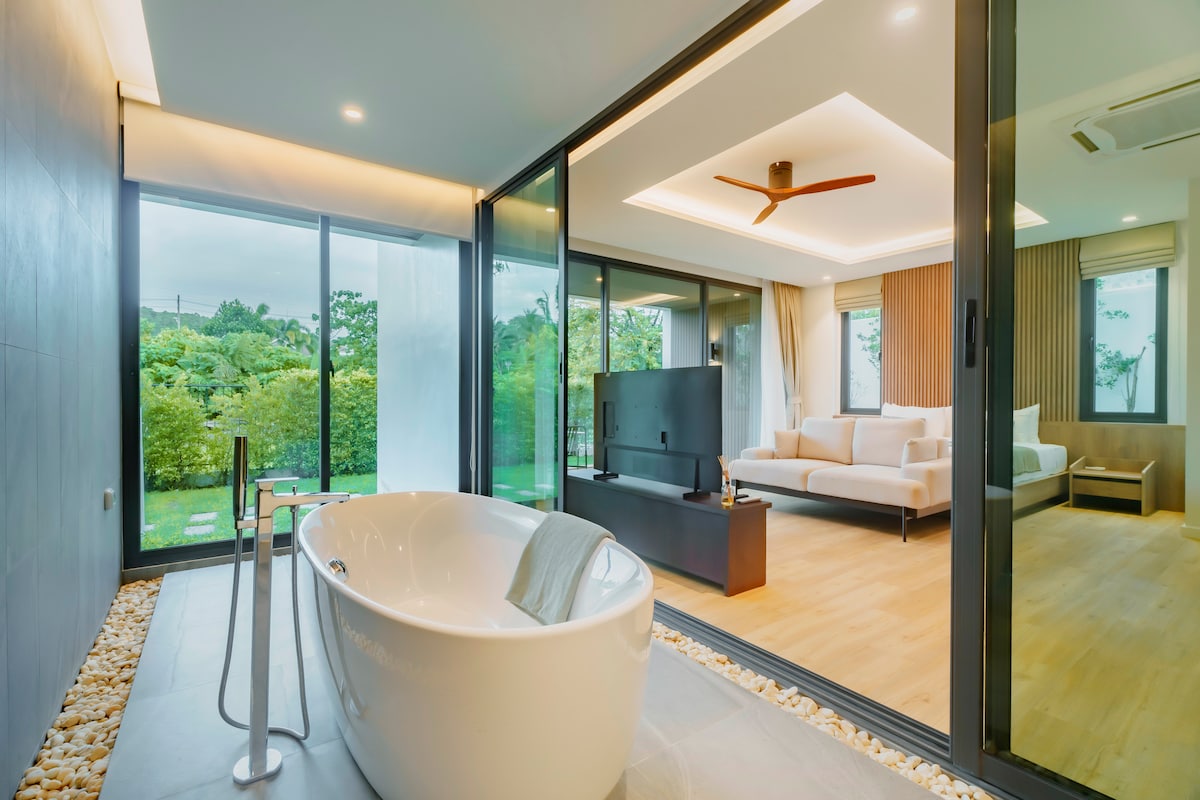
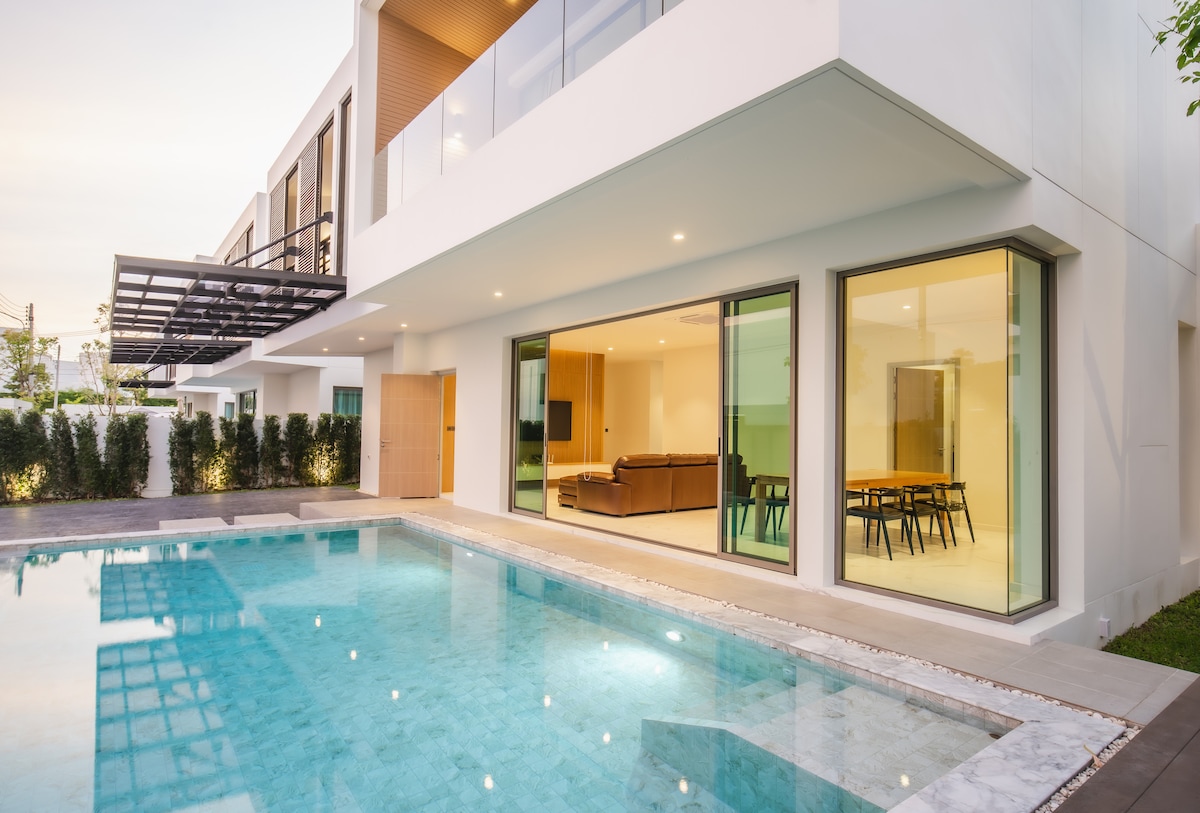
This is where we at Silqhaus come into the picture. Silqhaus, a Phuket and Pattaya holiday-rental company, has two private villas close to town: Niva Villa, with a lake view near Phuket Old Town, and Treva Villa, a three-bedroom pool villa near Phuket Town, so the Sunday market and the museums are a short drive away. Booking direct is always at least 10% below Airbnb and Booking.com for the same home and dates.
Frequently Asked Questions
What day is the Phuket Old Town market?
Sunday. The Lard Yai walking street market runs on Thalang Road from about 4 pm to 10 pm, when the street is closed to traffic.
How long do you need in Phuket Old Town?
Three to four hours for the main streets, or a full day with museums and a long lunch. Sunday adds the evening market.
Is Phuket Old Town worth visiting?
Yes. Phuket Old Town is the island’s historic heart, with Sino-Portuguese shophouses, museums, temples and some of Phuket’s best local food, a completely different side of the island from the beaches.
How much is the Thai Hua Museum?
200 THB per person, open 9 am to 5 pm and closed on Mondays (as of October 2026; call 076 211 224 to confirm). Museum Phuket nearby is free.