Big Buddha Phuket: Your Complete Guide to Visiting in 2026

Big Buddha Phuket: Your Complete Guide to Visiting in 2026

The 45-metre white marble Big Buddha rises above Nakkerd Hill, visible from beaches across southern Phuket.

You can see it from almost anywhere in southern Phuket. The massive white marble figure sitting serenely on Nakkerd Hill, catching sunlight and drawing your eye upward no matter which beach you are lounging on. Big Buddha Phuket — officially known as Phra Phutta Ming Mongkol Akenakiri — is the island’s most iconic landmark, a place of active worship, and one of the finest viewpoints you will find anywhere in Thailand.

After an 18-month closure following a devastating landslide in August 2024, the site reopened in March 2026. If you have been waiting to visit — or if this is your first trip to Phuket — here is everything you need to know before making the journey up that winding hillside road.

In This Guide

  1. What Is Big Buddha Phuket?
  2. Big Buddha Phuket Reopening: 2026 Update
  3. What You Will See at the Top
  4. How to Get to Big Buddha Phuket
  5. Dress Code and Temple Etiquette
  6. Best Time to Visit Big Buddha
  7. Practical Tips for Your Visit
  8. What to Do Near Big Buddha Phuket
  9. Where to Stay in Southern Phuket
  10. Big Buddha Phuket FAQ

What Is Big Buddha Phuket?

The full Big Buddha complex seen from above, with the smaller golden brass Buddha statue to the left.

Standing 45 metres tall and 25 metres wide, the Big Buddha is the third-tallest Buddha statue in all of Thailand. It depicts Gautama Buddha in the Maravichai sitting position, constructed from reinforced concrete and covered in shimmering white Burmese marble. The official name translates roughly to “The Cherished Auspicious Lord Buddha atop Naga Hill.”

Construction began in 2004, funded entirely by public donations. By 2017, roughly 80 percent of the project had been completed. The statue itself is finished, though the massive base — which will eventually include a giant marbled lotus leaf — continues to evolve. In 2008, the Supreme Patriarch of Thailand declared it the “Buddhist Treasure of Phuket,” cementing its spiritual and cultural significance on the island.

Next to the main white statue stands a smaller golden Buddha, made from 20 tonnes of brass. It is 12 metres tall and was built in honour of the Queen of Thailand. Together, the two figures create one of the most photographed scenes in southern Phuket.

Big Buddha Phuket Reopening: 2026 Update

On 23 August 2024, a major landslide near the site killed 13 people and forced an immediate closure. For 18 months, one of Phuket’s most visited attractions was off-limits. The site briefly reopened for three days around New Year 2026, but authorities closed it again almost immediately.

On 3 March 2026 — Makha Bucha Day — the Big Buddha reopened to visitors. As of April 2026, the site is open and accessible, including the stairs and the statue itself. However, given the unpredictable history of closures, it is worth checking the latest status on the day you plan to visit. A quick search online or a call to your hotel reception will save you a wasted trip.

What You Will See at the Top

The marble detail of Big Buddha's serene face catches different light throughout the day.
The marble detail of Big Buddha’s serene face catches different light throughout the day.

The Big Buddha itself is the obvious centrepiece, but the surrounding complex has several elements worth your time. The terrace at the base offers some of the best 360-degree panoramic views on the island. On a clear day, you can see Chalong Bay, Kata Beach, Karon Beach, and parts of Phuket Town stretching out below. In the opposite direction, forested hills roll toward the Andaman Sea.

At the base of the statue, a small hall displays the project’s history through photographs and timelines of the construction process. Buddhist teachings line the walls, and donation boxes sit alongside monks who offer blessings and water ceremonies. For a small donation (typically 100 baht), a monk will sprinkle holy water on your head and tie a white cotton bracelet around your wrist — a quiet, personal moment that stays with you.

Additionally, hundreds of inscribed marble tiles cover sections of the base. Visitors purchase these tiles, write their names or messages, and leave them as a form of blessing. It is a touching communal gesture that connects the monument to the thousands of people who helped fund it.

There are 94 steps from the main terrace to the base of the statue. The climb is manageable for most visitors, though the heat can make it feel longer than it is. Take your time.

How to Get to Big Buddha Phuket

The statue sits on top of Nakkerd Hill, between Chalong and Kata in southern Phuket. The road up is a winding 6-kilometre stretch that branches off Chaofa West Road, roughly one kilometre north of Chalong Circle. The road is paved and signposted, though some sections are steep and feature sharp curves.

Here is how to make the most of getting there, depending on your situation.

By taxi or ride-hailing app: This is the easiest option. Both Bolt and Grab operate in Phuket, though availability can vary near hilltop locations. From Kata or Karon, the ride takes about 15–20 minutes. One thing to keep in mind: getting a ride back down can be harder than getting up. Signal is sometimes weak at the top, and some drivers do not accept hilltop pickups. Have both apps installed as backup.

By motorbike or car rental: If you are comfortable riding on steep hillside roads, renting a motorbike is a popular and affordable option. The road is in decent condition, but less powerful scooters can struggle on the steeper inclines. Furthermore, the descent requires careful braking — tight curves combined with oncoming traffic demand your full attention.

By tuk-tuk: A classic way to arrive. Negotiate the price before departure. Many drivers will wait for you at the top and bring you back down, which solves the return-trip problem. Expect to pay somewhere between 400 and 800 baht depending on your starting point and negotiation skills.

On foot: A challenging but rewarding 2.5-kilometre jungle hike from Karon (starting at Soi Patak 14) takes roughly an hour. It is steep, hot, and not for everyone — but the sense of accomplishment at the top is real. Bring plenty of water.

Free parking is available at the top for those arriving by car or motorbike.

Dress Code and Temple Etiquette

This is an active religious site, not a tourist attraction with a spiritual theme. The distinction matters.

The dress code is straightforward: no sleeveless tops and no shorts or skirts above the knee. If you arrive in beach clothes (and many people do), free sarongs are available at the entrance. Guards are polite but firm about sending visitors back to cover up before entering the temple area.

Beyond clothing, a few points of etiquette will make your visit smoother. Remove your shoes before entering the temple hall. Keep your voice low, especially near monks or people in prayer. Remove hats as a sign of respect. Couples — even married ones — are asked not to embrace within the temple grounds. If a monk walks past, step to a lower position. These are small gestures, but they matter.

The atmosphere at the Big Buddha is peaceful. Visitors who approach with respect consistently describe it as one of the most calming experiences they have had in Phuket — a stark contrast to the bustle of Patong or Bangla Road just a few kilometres away.

Best Time to Visit Big Buddha

Big Buddha is open every day from 8:00 AM – 7:30 PM. Early morning is the undisputed best time. Arriving between 8:00 and 9:00 AM means fewer crowds, cooler temperatures, and soft light that makes the white marble glow. The viewpoint is also at its clearest in the morning before haze builds up.

Late afternoon — around 4:30 to 5:30 PM — is the other golden window. The setting sun bathes the marble in warm golden tones, and the views over Chalong Bay at this hour are spectacular. However, the site closes at 6:00 PM, so you will need to time your arrival carefully.

Midday visits are possible but not ideal. The hilltop is exposed with minimal shade, and temperatures regularly exceed 35°C between 11:00 AM and 2:00 PM. If you do visit at midday, bring water, sunscreen, and a hat (remove the hat when entering the temple area).

In terms of season, the cool months from November through February offer the most pleasant weather for outdoor sightseeing. That said, the Big Buddha is worth visiting year-round. Even on an overcast day, the dramatic cloud formations behind the statue create some of the most striking photographs.

Practical Tips for Your Visit

A few things that will make your visit noticeably smoother:

Allocate 1–2 hours. You can see the statue itself in 20 minutes, but the views, the temple hall, the blessings, and the walk around the complex deserve more time. Rushing through this place defeats the purpose of coming.

Watch for monkeys. The hillside is home to macaques that have learned visitors carry food and drinks. Keep belongings secure, do not eat near them, and do not attempt to feed them. They are fast and they will take your sunglasses off your head if given the opportunity.

Macaque monkey sitting on a metal railing at Big Buddha viewpoint in Phuket, Thailand, with panoramic views of Chalong Bay and lush green hills in the background

Bring your own water. A small café at the top sells drinks and snacks, but bringing a reusable bottle ensures you stay hydrated during the walk up. The café’s offerings are basic.

Entry is free. It has always been free, and there is no indication that will change. Donations are welcome and go directly toward maintaining the site and ongoing construction.

Wear comfortable shoes. The 94 steps are manageable but the surface can be hot underfoot. Flip-flops will work, but sneakers or sandals with grip are better — especially for the walk back down the hill if you arrived on foot.

Toilets are available near the parking area and are free to use. Condition varies. Bringing your own tissue is wise.

Photography is welcome throughout the complex. However, drones are officially not permitted. Respect the restriction — enforcement has been getting stricter.

What to Do Near Big Buddha Phuket

Since you are already in southern Phuket, it makes sense to combine the Big Buddha with other nearby attractions rather than making it a standalone trip.

Wat Chalong is Phuket’s most important and busiest Buddhist temple, just a 10-minute drive from the base of Nakkerd Hill. Its three-tiered, 61-metre-high chedi is impressive in its own right, and the temple grounds offer a deeper look at Thai Buddhist traditions. Many visitors pair the two sites into a single morning.

Karon Viewpoint (also known as Kata Viewpoint) sits along the coast road between Kata Noi and Nai Harn. The vantage point offers a triple-bay panorama that is one of the most photographed scenes on the island. It is a quick detour if you are heading south after the Big Buddha.

Promthep Cape is the southernmost tip of Phuket and arguably the island’s most famous sunset spot. If you visit the Big Buddha in the late afternoon, driving to Promthep for sunset creates a perfect end to the day.

For something different, the Nakkerd Sea View Restaurant near the Big Buddha offers reasonable Thai food with sweeping views — a good option for lunch before or after your visit.

Where to Stay in Southern Phuket

The Big Buddha is located in the heart of southern Phuket, making it easily accessible from Chalong, Kata, Karon, and Rawai. If your accommodation is in this part of the island, you are never more than 20–30 minutes from the base of the hill.

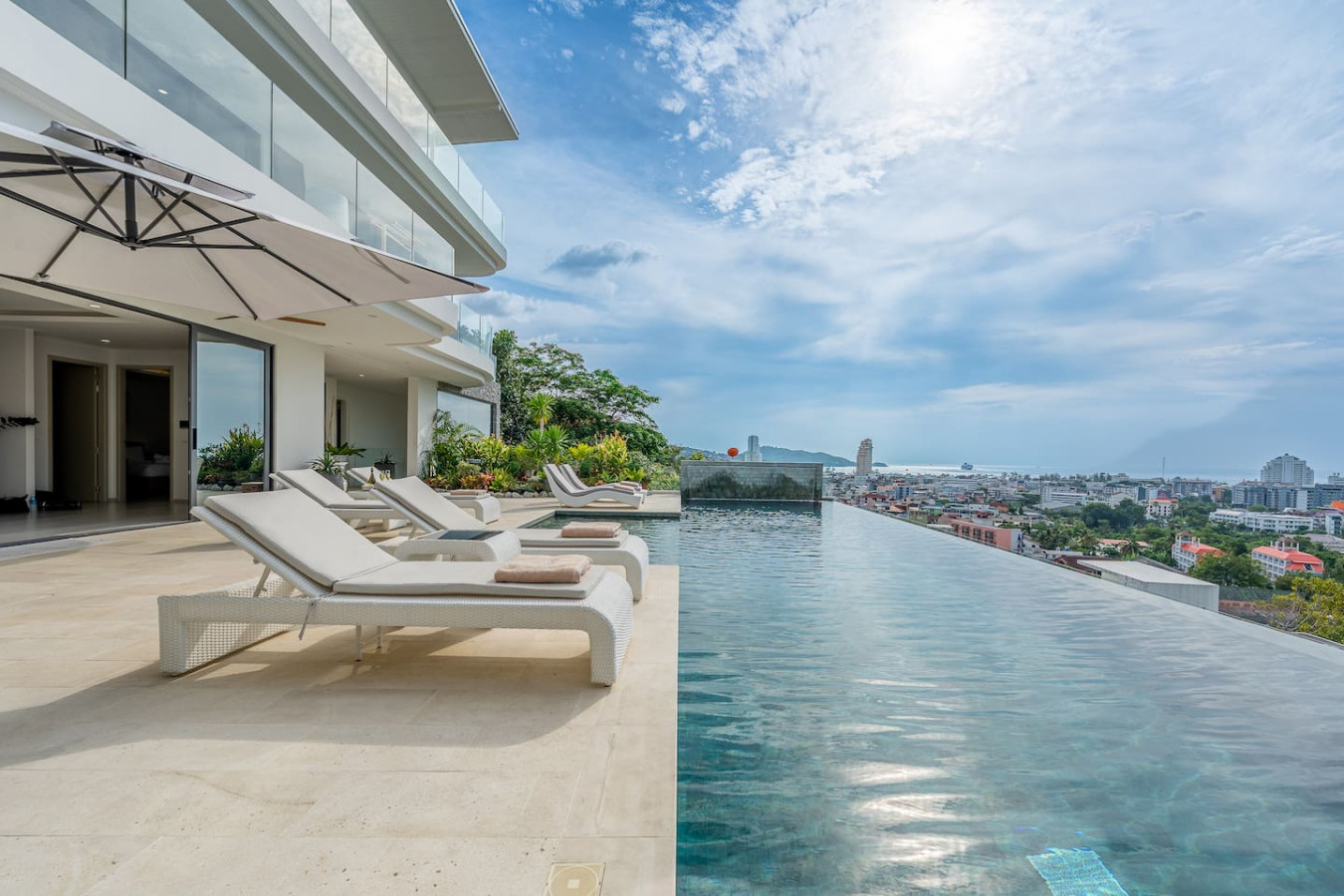
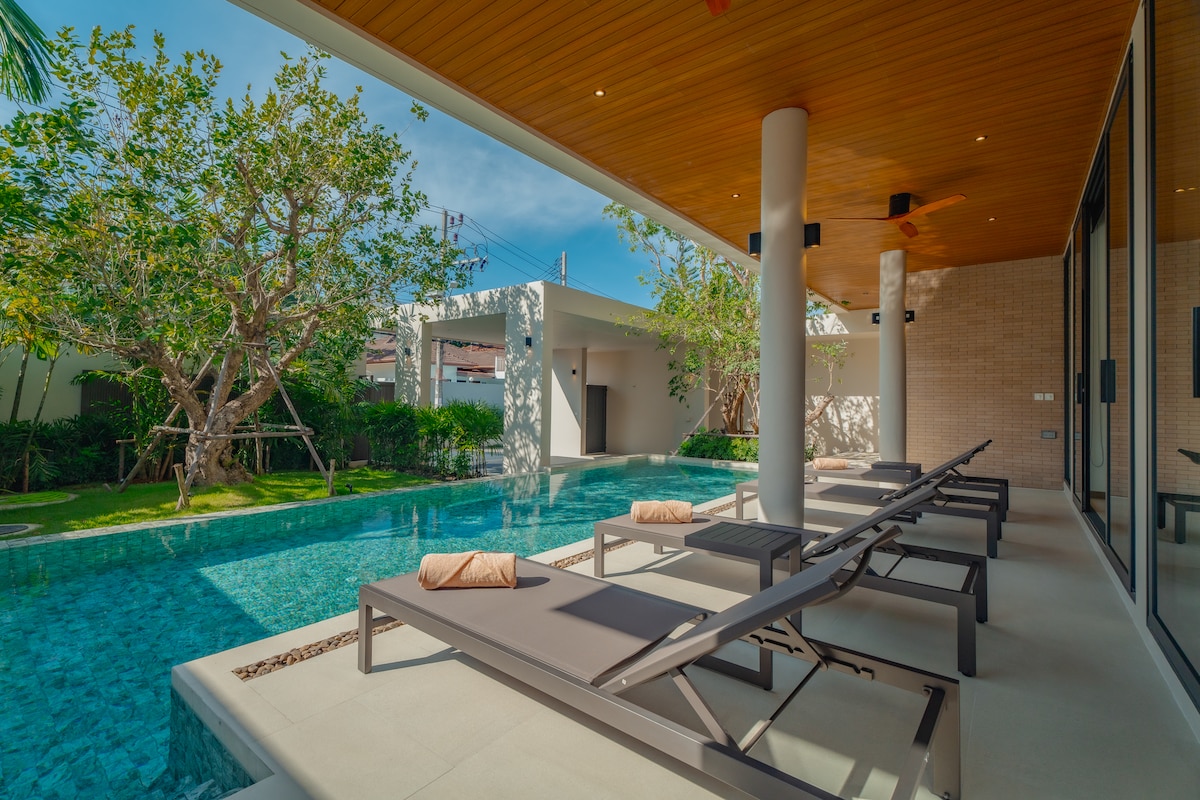
This is where we at Silqhaus come into the picture. Our private luxury villas in Phuket give you a home base that is close to the island’s best cultural and scenic landmarks — without the chaos of the resort strips. Having your own pool to decompress in after a morning of temple visits and hilltop viewpoints is the kind of quiet luxury that turns a good trip into a great one.

Whether you are exploring the Big Buddha at sunrise or chasing sunsets at Promthep Cape, staying in southern Phuket puts you at the centre of everything worth seeing.

Big Buddha Phuket FAQ

Is Big Buddha Phuket open in 2026?

Yes. The site reopened on 3 March 2026 after being closed since August 2024 due to a landslide. As of April 2026, it is open daily from approximately 8:00 AM to 7:30 PM. However, access has been unpredictable — always verify the current status before visiting.

Is there an entrance fee for Big Buddha?

No. Entry has always been free. Donations are welcome and help fund ongoing construction and maintenance of the site.

How tall is the Big Buddha in Phuket?

The statue is 45 metres (148 feet) tall and 25.45 metres (83.5 feet) wide. It is the third-tallest Buddha statue in Thailand and is made from reinforced concrete covered with white Burmese marble.

What should I wear to Big Buddha Phuket?

Cover your shoulders and knees. No sleeveless tops or short skirts. Free sarongs are provided at the entrance if you forget. It is a dress code, not a suggestion — guards will ask you to cover up before entering.

How do I get to Big Buddha from Patong?

The drive from Patong takes approximately 30–40 minutes via the coastal road through Karon. A taxi, Bolt, or Grab is the most convenient option. You can also hire a tuk-tuk or rent a motorbike if you are comfortable on hill roads.

What is the official name of Big Buddha Phuket?

The official name is Phra Phutta Ming Mongkol Akenakiri (พระพุทธมิ่งมงคลเอกนาคคีรี), shortened to Ming Mongkol Buddha. It belongs to Wat Kitthi Sankaram (Wat Kata).

Pack your camera, cover your knees, and get ready to see Phuket from its highest point. The Big Buddha has been watching over this island for more than two decades — and after 18 months behind closed gates, it is back. The views are waiting.