Naithon Beach (Nai Thon) is a quiet, curved bay of about 1 km on Phuket’s northwest coast, between Nai Yang and Layan and about 30 km from Phuket Town. It is uncrowded, good for swimming from November to April, and far less developed than the beaches further south.
There is a certain kind of traveller who does a lap of Phuket’s famous beaches and then starts asking locals where they actually go. The answer often includes Naithon. It manages to be genuinely beautiful and genuinely uncrowded in a way few beaches this close to Phuket’s resorts manage, and those who know it tend to be protective of it.
At a Glance
- Where: Northwest coast, between Nai Yang (about 5 km north) and Layan; about 30 km from Phuket Town
- Beach: About 1 km of golden sand in a curved bay backed by trees
- Swimming: Good from November to April; Phuket Province advises against swimming in the monsoon
- Crowds: Rarely busy, even in high season
- Getting there: Turn off the airport road about 1 km past the airport junction, then about 3 km to the beach
In This Guide
- About Naithon Beach
- Swimming and Sea Conditions
- What to Do
- Where to Eat
- Where to Stay
- Getting to Naithon Beach
- Best Time to Visit
- Nearby Beaches
- Frequently Asked Questions
- Sources
About Naithon Beach
Naithon runs for about one kilometre in a gentle curve. The sand is warm golden, coarser than the white powder of Surin or Bang Tao but clean and comfortable. Casuarinas and forested hills behind the beach absorb noise and keep it quiet even when the restaurants along the access road are open.
The beach is never busy in the way Phuket’s commercial beaches are. On a typical high-season day you might share the sand with a few dozen people; on weekday mornings you can often have a long stretch to yourself. That is the benchmark other Phuket beaches should be measured against: not how famous they are, but how it feels to be there.
Swimming and Sea Conditions
Naithon is a comfortable swimming beach from November to April. According to Phuket Province, the curved bay protects boats from wind and waves and is ideal for relaxing and swimming, and the seabed slopes gradually, which suits families and less confident swimmers.
From May to October the bay takes swell from the southwest monsoon, and the province advises against swimming in that season because of strong currents. Check the flags and conditions before going in outside high season.
What to Do
Naithon’s activities are low-key by design: swimming, walking, reading and watching the light change over the Andaman Sea. For more structure, a kayak along the coast towards the headlands reveals small coves and rock formations you can only reach from the water; ask at the beach whether rentals are operating.

The forested hills behind the beach are worth exploring early, before the heat builds, and the view back over the bay from the headland is one of the better coastal vistas in Phuket’s north. For diving, boat trips and more facilities, Nai Yang Beach is about 10 minutes north.
Where to Eat
Eating at Naithon is simple but good. A small cluster of Thai restaurants and beach bars along the access road and at the beach entrance serves fresh seafood, grilled dishes and Thai classics such as pad thai, green curry and som tam, at prices without tourist inflation. They survive on local and repeat customers, so they have to deliver.
A whole grilled fish with rice and a cold drink is one of the more satisfying meals in the north of Phuket for the price. For a bigger choice in the evening, Cherngtalay and Boat Avenue near Bang Tao are about 20 minutes by car.
Where to Stay
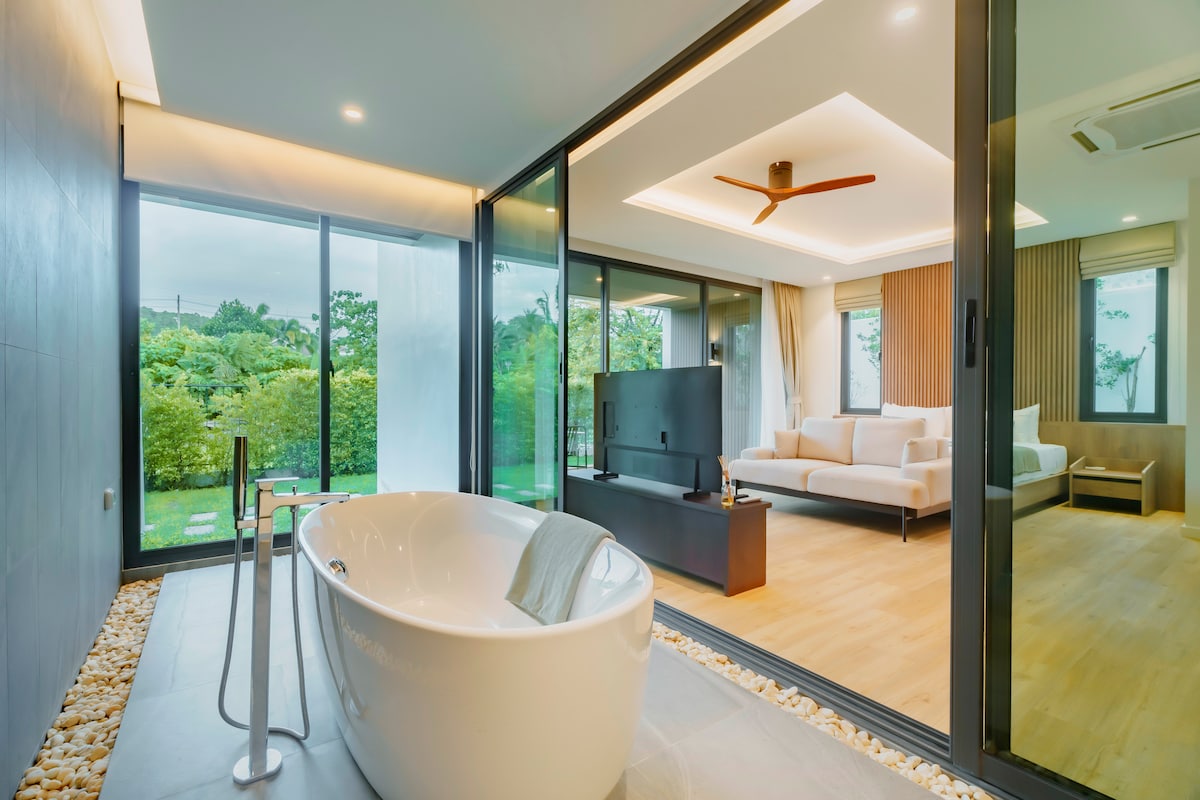
Naithon has a few small hotels and a growing number of private villas in the hills and along the roads behind the beach, suited to travellers who want quiet above all.
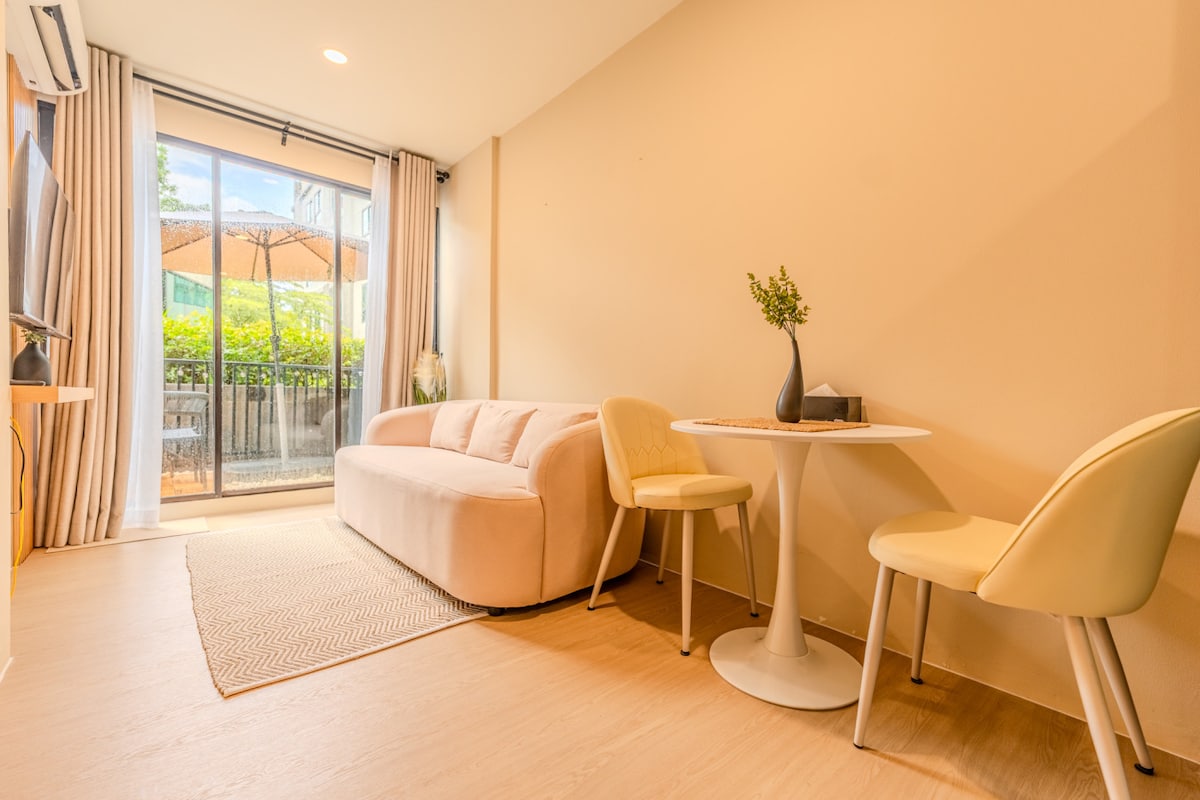
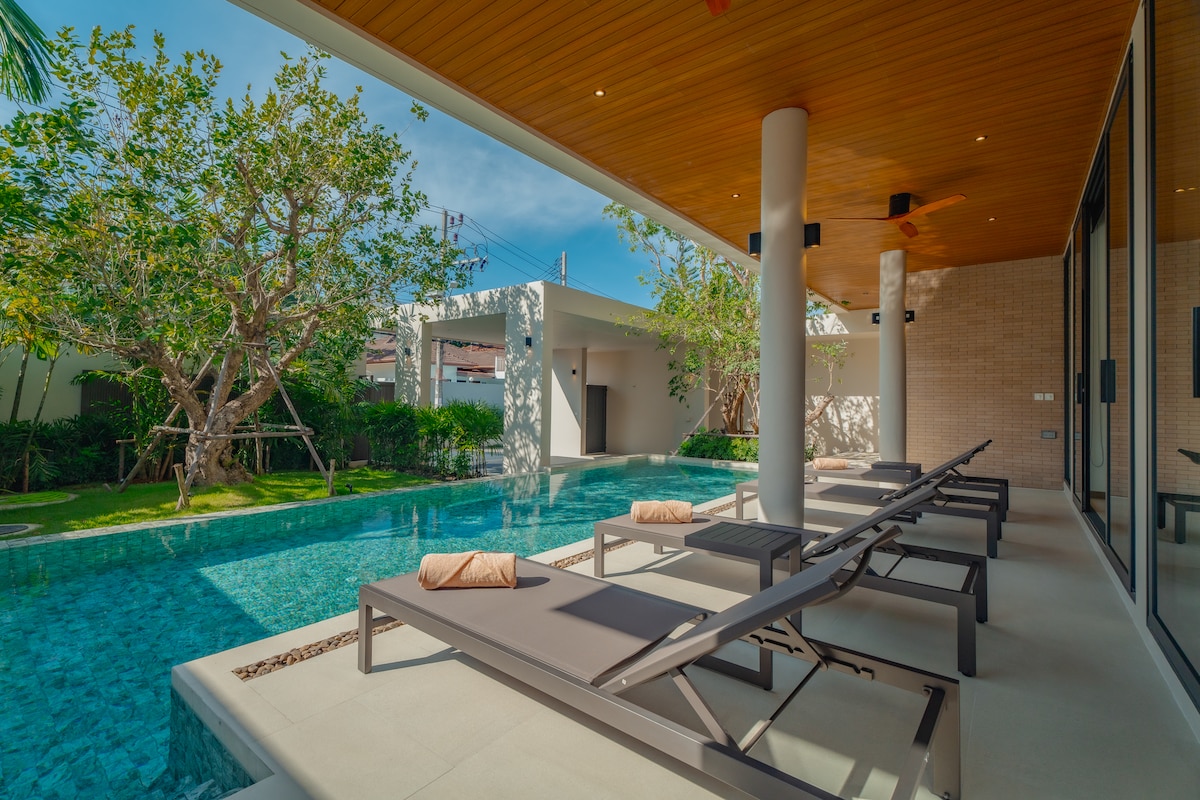
This is where we at Silqhaus come into the picture. Silqhaus, a Phuket and Pattaya holiday-rental company, has apartments in Bang Tao, about 20 minutes south: Zcape1 with its big terrace and the ZcapeX2 pool-view units, a good base for combining Naithon’s quiet with Bang Tao’s restaurants. Booking direct is always at least 10% below Airbnb and Booking.com for the same home and dates.
Getting to Naithon Beach
According to Phuket Province, from the Heroines Monument take the road to Phuket International Airport; at the airport junction turn left, and after about 1 km follow the sign to Nai Thon Beach and drive about 3 km more. From Phuket Town, allow 40 to 50 minutes. From the airport it is a short drive; metered airport taxis start at 150 THB for the first 2 km plus a 100 THB airport fee (as of September 2026).
Nai Yang Beach is about 5 km north and Bang Tao roughly 8 km south. A scooter makes Naithon a good base for a multi-beach day on the northwest coast; the road between these beaches is scenic and far quieter than the island’s central corridors.
Best Time to Visit
November to April is Naithon’s best season: calm sea, clear skies and the beach at its most inviting. January and February are ideal for swimming. December brings Phuket’s highest prices, but with so little commercial development the premium is less dramatic here. For every month, see the best time to visit Phuket.
The wet season is quiet, cheaper and beautiful in a moody way. If you are flexible about swimming and want the raw version of the northwest coast, and lower accommodation rates, Naithon is rewarding between June and September. For more ideas, visit our travel guides.
Nearby Beaches
Naithon sits within easy reach of several of Phuket’s best northern beaches. Nai Yang, about 5 km north, has a coral reef offshore and more facilities. Bang Tao, roughly 8 km south, has the beach clubs, the Laguna resorts and 6 to 8 km of sand. Layan, immediately to the south, is even quieter. Further north, Mai Khao is Phuket’s wild northern stretch.
Frequently Asked Questions
Is Naithon Beach good for swimming?
Yes, from November to April: the curved bay is sheltered and the seabed slopes gently. Phuket Province advises against swimming during the monsoon, from May to October, because of strong currents.
How far is Naithon Beach from Phuket Airport?
Naithon Beach is a short drive from the airport: turn left at the airport junction, then follow the signs for about 4 km. Metered airport taxis start at 150 THB plus a 100 THB airport fee (as of September 2026).
Is Naithon Beach crowded?
Rarely. Even in high season you usually share the sand with a few dozen people, and weekday mornings are often almost empty.
Is Naithon the same as Nai Thon?
Yes. Naithon, Nai Thon and Nai Thorn are different spellings of the same beach on Phuket’s northwest coast.